
the coffee wheel of tasting
I can remember the first time I had a cup of coffee. I can remember the first time I had a great cup of coffee. After the first cup I didnt really care too much for coffee. I took it sometimes (it was the non optional social convention) and it tasted ok. All of this was 25 years ago when if the coffee revolution had started it hadnt reached here.
Then just over 10 years I had a cup of coffee and it changed everything. It didnt taste like thick tar, or like the dust some coffee makers put into jars (a few generations may have been brought up on this).
This cup started as an unroasted green bean. It was then roasted over a charcoal fire in what looked like a frying pan and then ground in front of me using a mortar and pestle. The ground coffee was then cooked in a little kettle /pot and if you preferred sugar it was added into the pot.
I then had to ask what this was to amazed on lookers, as it didnt taste like any coffee I had had before. This was in Ethiopia. In a village called Bekoji. If you went to the local coffee house/hang out - this is what happened. It was also a ceremonial tradition for people when you visited their house. It was something else. But it was very strong. More than two small cups had you buzzing. It was once reported that someone I know had 7 of these and that night woke up and saw little green men.
Since then I have been chasing everything to do with coffee making, the whole process of how it gets here and trying to find my best cup of coffee. Its still about preference.
Following a quick history check of the coffee revolution, arguably about the early 00’s, its hard to find one exact cause of influence. Some saw the migration of people from Australia and New Zealand as something that might have influenced the market. The increase of coffee drinking in China too at this time may have impacted the whole market. Some say Tim Wendalboe the 2004 world barista champion changed the idea of coffee making, as one person I know hilariously put it ‘when they started charging £4 for half a cup of coffee’. What is true is that 20 years ago the ALCN started ground breaking research into this market. Read about it here. So a change did happen.
Then it took a step further. At this time people discussed the roast and its influence, but over the past 10 years the idea of farming and growing beans ethically has changed the industry further. We are getting better coffee. The people who are growing it are getting better prices and it goes to their farms. The process of plant to wholesale is a massive niche industry for connoisseurs. Even the process it goes through has a huge amount of variance. I’m not complaining if the taste is always getting better.
Recently I had probably one of the best bags of coffee I have had in a while. This is based on my home brewing technique which does not always follow the recognised guidelines. I wondered why it tasted so good and what made it stand out.
Most coffee comes with some information about the bean and the tasting notes. And the roast. I definitely prefer a lighter to medium roast.
I have also attended a few coffee tasting nights and listened as they talked about notes, where it was grown and how it was processed. For me back then I wasnt tasting any of these notes. I didnt really get it. I liked the taste or I didnt. Even on another tasting night I was completely off the mark. I still knew which one I liked.
So I read up a little about it. On the second tasting night I was told about the coffee wheel for tasting. What? So here it is. The more you read the more complicated making a good cup of coffee sounds.
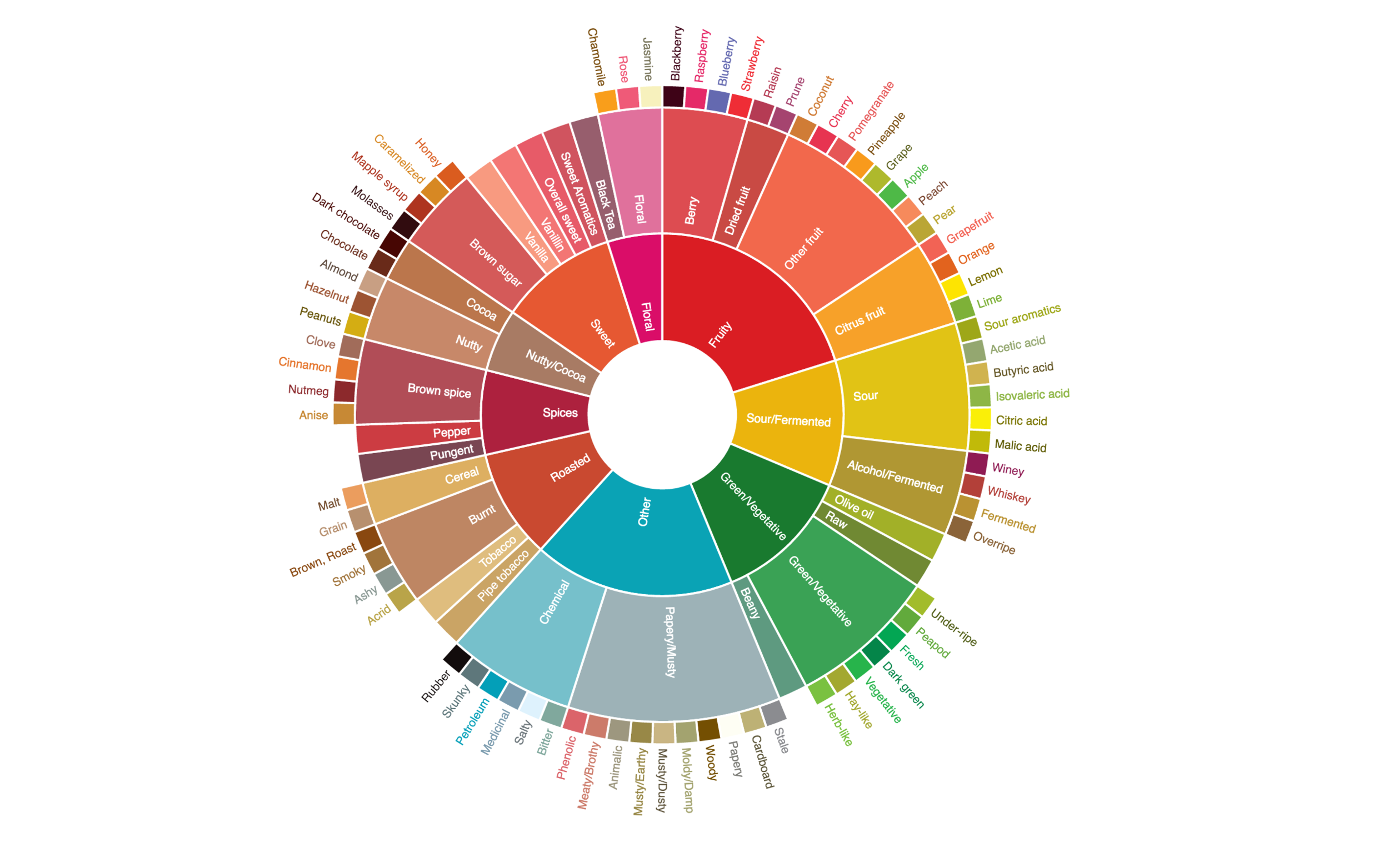
Coffee Tasting Wheel
However while I’m not great at picking out those notes, I can see from the coffee wheel what my preference is. I also saw this diagram and it made a little more sense.
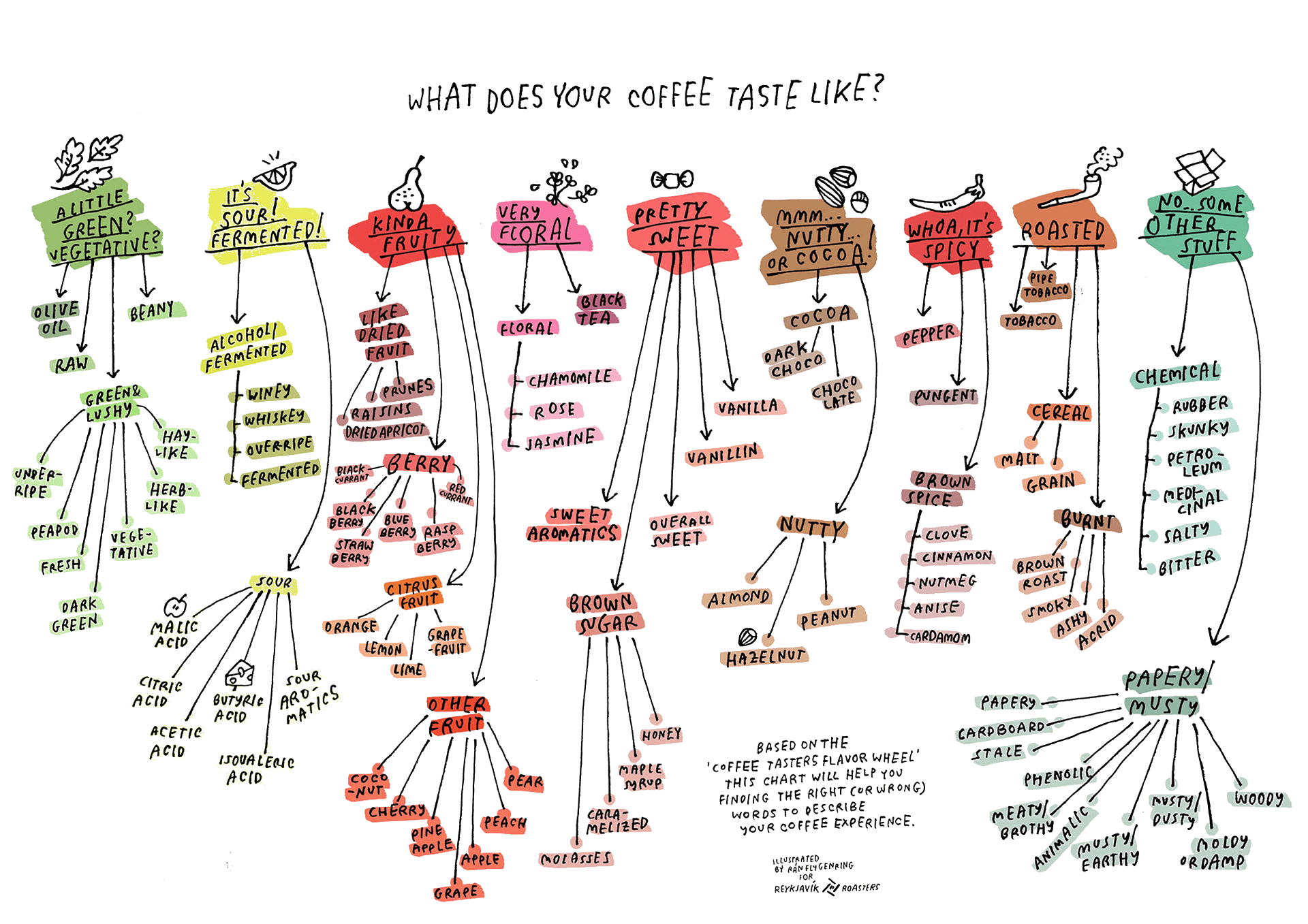
Copyright Reykjavik Roasters
Its hard to remember the great bags of coffee one from another over the years. We have companies roasting across the UK like Monmouth and Square Mile. These guys have been at it quite a while.
However preference according to what we see above, means that there are lighter and sweeter roasts happening. More companies are starting up with their own roasts.
So the coffee I had was from Kiss the Hippo in Richmond London. It was a Red Bourbon bean which is known for being lighter and sweeter. Its a variety of Typica which is in itself a variety of Arabica. Some argue that there are 2, some 4 , some even 7 types of coffee beans but with the variants there is quite a list. This coffee was grown in the Sholi district of Rwanda and its tasting notes where Watermelon, Pink Apple and Raspberry coulis. So very sweet and light.
Unfortunately at this time it has sold out of stock. It still stands as the best coffee I’ve home brewed to date.